Speculative Gestures
Surfaces, stickers, and the futures of holding
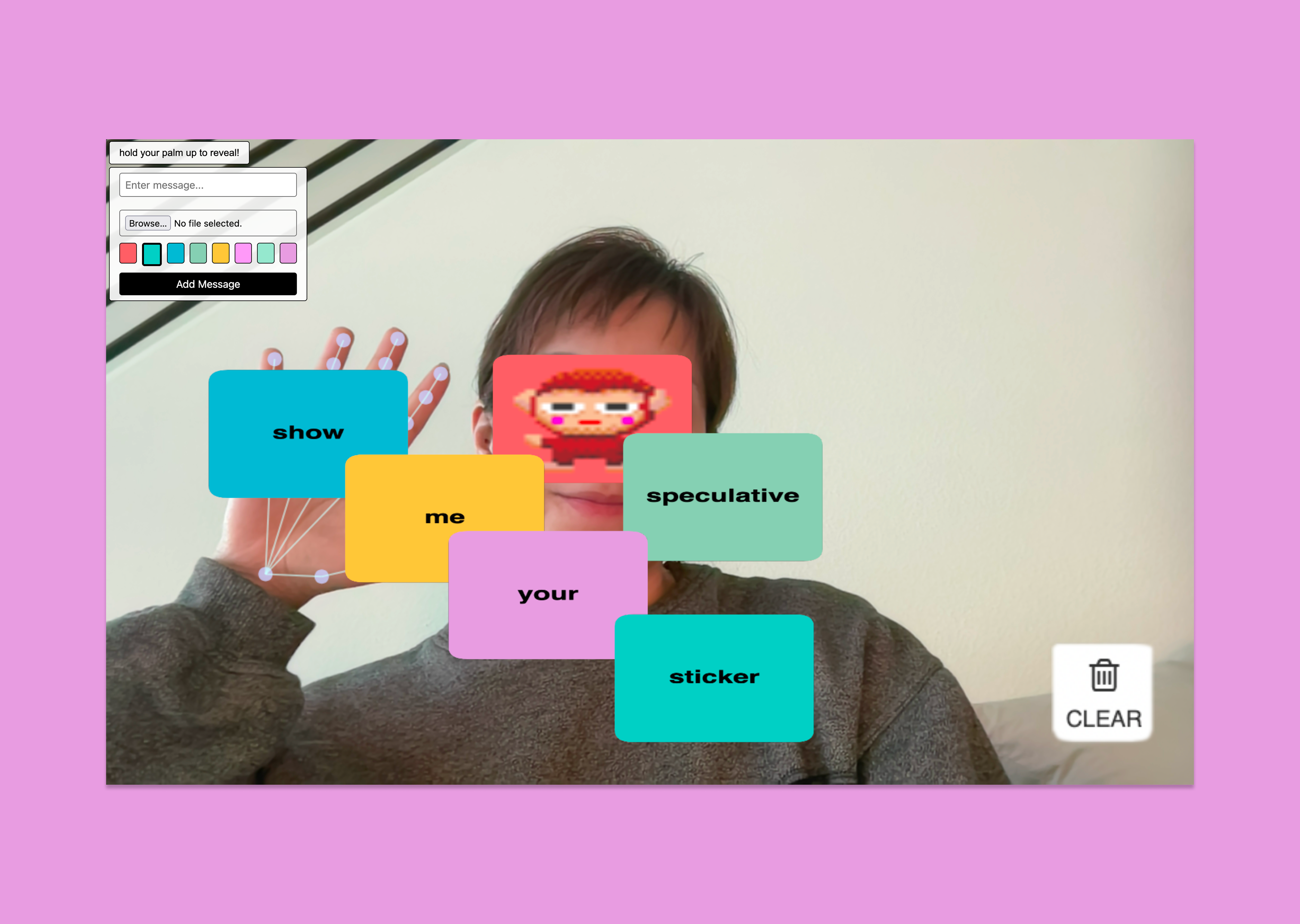
Final Outcome Snapshot
A speculative interaction language for sticker-like interfaces
This case study combines futures framing and executable gesture probes. The output is not a finished product; it is a coherent interaction direction with supporting artifacts across cone mapping, behavioral sketches, and world context.
Overview
Assignment & approach
This project documents a speculative design sprint: use thought experiments on three everyday objects, map the strongest thread through a futures cone (possible → plausible → probable → preferable), then materialize ideas through gesture sketches and a mapping diagram toward a small slice of world building.
Outcomes (edit to match your rubric)
- 1.Futures cone analysis anchored to smart stickers / hybrid physical–digital interfaces
- 2.Live p5.js gesture sketches (embedded in Gesture Library)
- 3.Gesture-to-object mapping diagram and world-building direction
Thought Experiments
Three objects, many futures
I brainstormed under three prompts—Sticker, Perfume, and Writing utensil—listing "what if" questions without judging feasibility first. That divergence opened unexpected connections; I then committed the futures cone and gesture work to the sticker thread because it offered the clearest bridge from physical artifact to digital behavior (NFC, peel interactions, ambient displays). Perfume and writing remain divergent branches—useful for contrast, not the main prototype arc.
1. Sticker — primary direction
Stickers sit between fashion, medicine, and UI; they are cheap, tactile, and already semi-smart in the real world. This became my default object for the cone and gestures.
- What if stickers are used to mend clothing?
- A sticker that only appears to the person that is meant to see it.
- Stickers can be used as buttons.
- What if stickers can duplicate themselves?
- What if stickers can change appearance with air pollution or light changes?
- What if peeling a sticker can trigger a digital response, like how removing a sticker removes a warranty? Perhaps peeling a sticker seal could open a video or start an app.
- What if you can use stickers as medicine? Instead of a nicotine patch, a "headache sticker."
- Stickers are permanent.
2. Perfume — divergent exploration
Explored memory, identity, and invisible senses. I did not push this into the cone prototype, but it informed how I think about permission and intimacy in the sticker scenarios.
- What if visual memories can be stored in perfumes?
- What if memories can be erased with scent?
- What if you can see smells?
- What if perfumes were not used to cover odors, but instead to change a mood?
- What if your body odor is used as an identifier, like DNA or a fingerprint?
- Use scents for an environment setting that is digital.
3. Writing utensil — divergent exploration
Stressed literacy, record-keeping, and bodily constraint. Useful for challenging whether "input" must look like a screen; gestural work later borrowed from this friction.
- What if humans didn't communicate through written language?
- What if there was no way to record history?
- A writing utensil can use any liquid as ink, like ketchup or orange juice.
- What if the writing utensil only works based on your body heat?
Futures Cone
Mapping the sticker thread
A futures cone sorts ideas by how grounded they are in today's reality and how much they depend on values and policy—not just technology. Possible asks what physics and existing labs allow; Plausible adds product and adoption paths; Probable follows trend lines if the world continues on its current course; Preferable is where I state what future I want to argue for (and what I refuse to normalize).
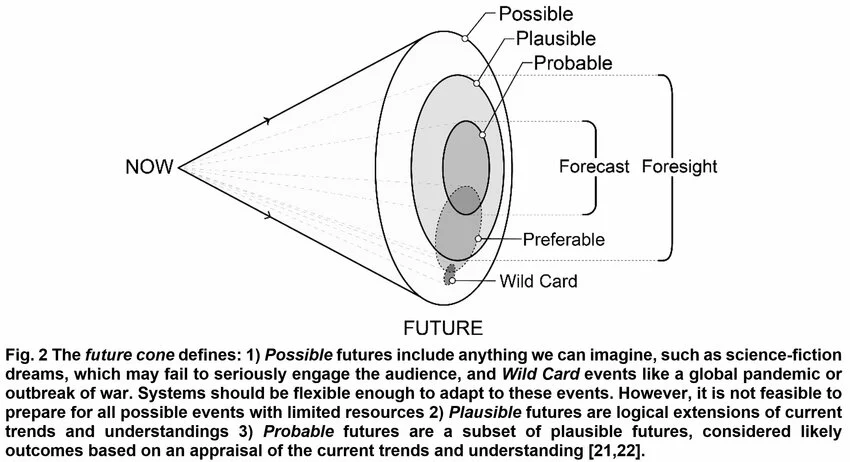
Possible
- What is already real: RFID, NFC, flexible displays, and vision APIs mean "sticker as interface" is not fantasy—it is lab-ready. I mapped my wildest prompts against hardware that already exists.
- Environmental or light-reactive surfaces are possible today at prototype scale; my sticker ideas that change with pollution or daylight sit here.
Plausible
- Near-term products: peel-to-open digital actions, stickers as soft buttons, and personalized overlays in retail spaces feel plausible if NFC + consent UX are designed carefully.
- Medical "sticker" delivery is plausible because transdermal patches already exist; the gap is regulation and precision, not imagination.
Probable
- Where trends point: more RFID in everyday objects, more cameras + AI in public space, more expectation of ambient digital layers. Smart stickers as ID, wayfinding, or gentle nudges fit that trajectory.
- I treat this band as "likely if nothing major shifts"—useful for stress-testing whether I still want the future I am designing toward.
Preferable
- Value judgment: I want sticker-like interfaces that improve health and access without eroding privacy or attention. Preferable futures are smaller, slower, and opt-in—not every "probable" path is worth building.
Gesture Library
Interactive gesture sketches
After the cone, I wanted something tangible: how might a body gesture express the "growth" or activation of a sticker-like digital layer? The p5.js studies below are probes—not final UI—meant to iterate quickly on timing, feedback, and metaphor.
Growth
Polka dots emerge from the bottom and grow into a pattern—an organic metaphor for how a sticker-based interaction might "grow" into a full digital response.
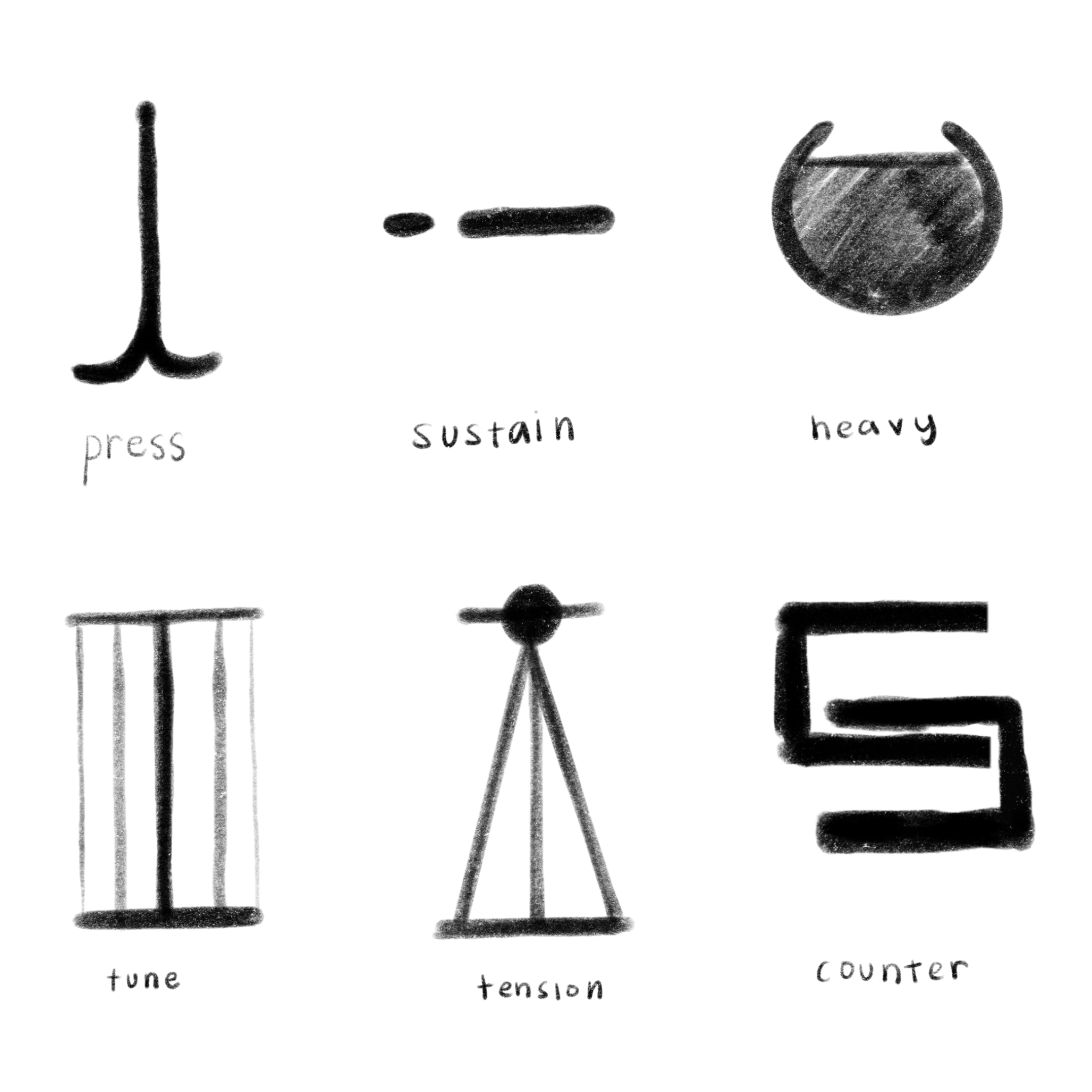
2D gesture sheet
Hand-drawn IR-style gestures (press, sustain, sweep, etc.). Swap this image if you have a newer scan.
Interaction System
From gesture input to interface response
To mirror the reference structure, this section isolates the mechanics: input grammar, state feedback, and escalation behavior across the gesture probes.
Input
Hold, sweep, press, and release as primary gesture verbs.
State
Idle → detected → committed → revealed transitions across interactions.
Feedback
Particle, color, and density shifts communicate confidence and progression.
Micro interaction flow
01
Palm open
User holds palm open in front of the camera.
02
Gesture recognized
System confirms a stable hold gesture.
03
Sticker message appears
UI reveals: "Holding sticker..." as active feedback.
Gesture Mapping
Gesture ↔ object mapping
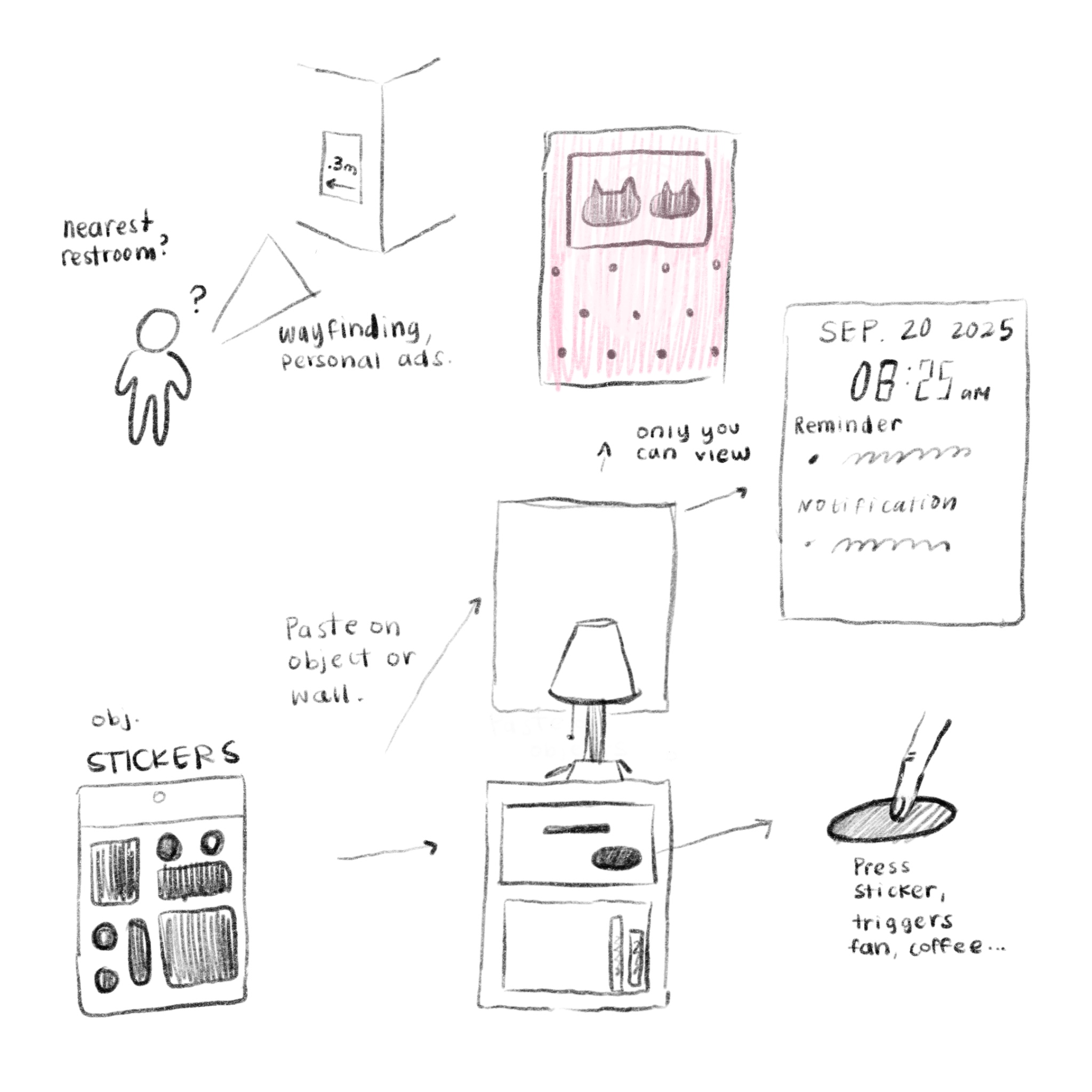
This diagram ties gestures and domestic objects to outputs (sound, projection, calendar). Read it as a storyboard for a room: where the body moves, what the sticker or sensor might represent, and what feedback loops exist.
Edit this walkthrough to match your drawing: replace the numbered points below with labels that match regions in your image (e.g. bedside zone, window, display wall).
- Entry / attention — what triggers the first digital layer.
- Object anchors — physical things that host stickers or sensors.
- Feedback — sound, light, or projection (annotate per your sketch).
World Building
Scenario & prototype
World building here is still partial: the cone and gestures describe a near-future domestic space where cheap stickers and ambient displays co-exist. The live build below is hosted on GitHub Pages—step through palm hold, recycle bin, and add-message flows the same way reviewers would use a gesture demo.
Glossary
Key terms used in this case study
Speculative Design
A design approach that explores possible futures to ask critical questions, rather than only solving immediate product problems.
Thought Experiment
A structured “what if” prompt used to imagine scenarios and test assumptions before building.
Futures Cone
A model for sorting future scenarios by likelihood and desirability: possible, plausible, probable, and preferable.
Plausible Future
A future that could realistically happen based on current technology, social behavior, and constraints.
Preferable Future
A future selected by values and ethics: not just what can happen, but what should happen.
Ambient Interface
An interface that blends into the environment and communicates through subtle cues like light, sound, or presence.
NFC
Near Field Communication; short-range wireless tech that lets physical objects trigger digital actions.
RFID
Radio-frequency identification; technology that tracks or identifies tagged objects wirelessly.
World Building
Designing the rules, context, and interactions of a future scenario so prototypes feel coherent and believable.
Reflection
What I learned
Process
I moved from divergent prompts to a single cone thread (stickers), then to gestures. The hardest part was keeping speculative freedom while still grounding claims in plausible tech.
Challenges
This assignment was a brain exercise. I enjoy sci-fi and unworldly films, but I had not unpacked how those worlds are built step by step. I am still wrestling with world hinting and what a representative mock-up should look like at this scale.
Next steps
Tighten the GitHub Pages prototype and keep gesture mapping visuals aligned with the live demo.
Similar works

Hyperfaith
A speculative design project examining how faith, technology, and consumer ritual converge.

Spinning the Digital Thread
A design research project tracing connections between textiles, language, and computation.
Dots & Pixels
A conference identity system connecting print craft, accessibility, and digital interfaces.