Home/Research/Spinning the Digital Thread

Spinning the Digital Thread

A research exploration of computational thinking through the lens of historical textile technologies and colonial linguistic practices. I'm developing this work through the DesignInquiry Design Research Fellowship, with support from the Texas State IDEA Center.

Research tool

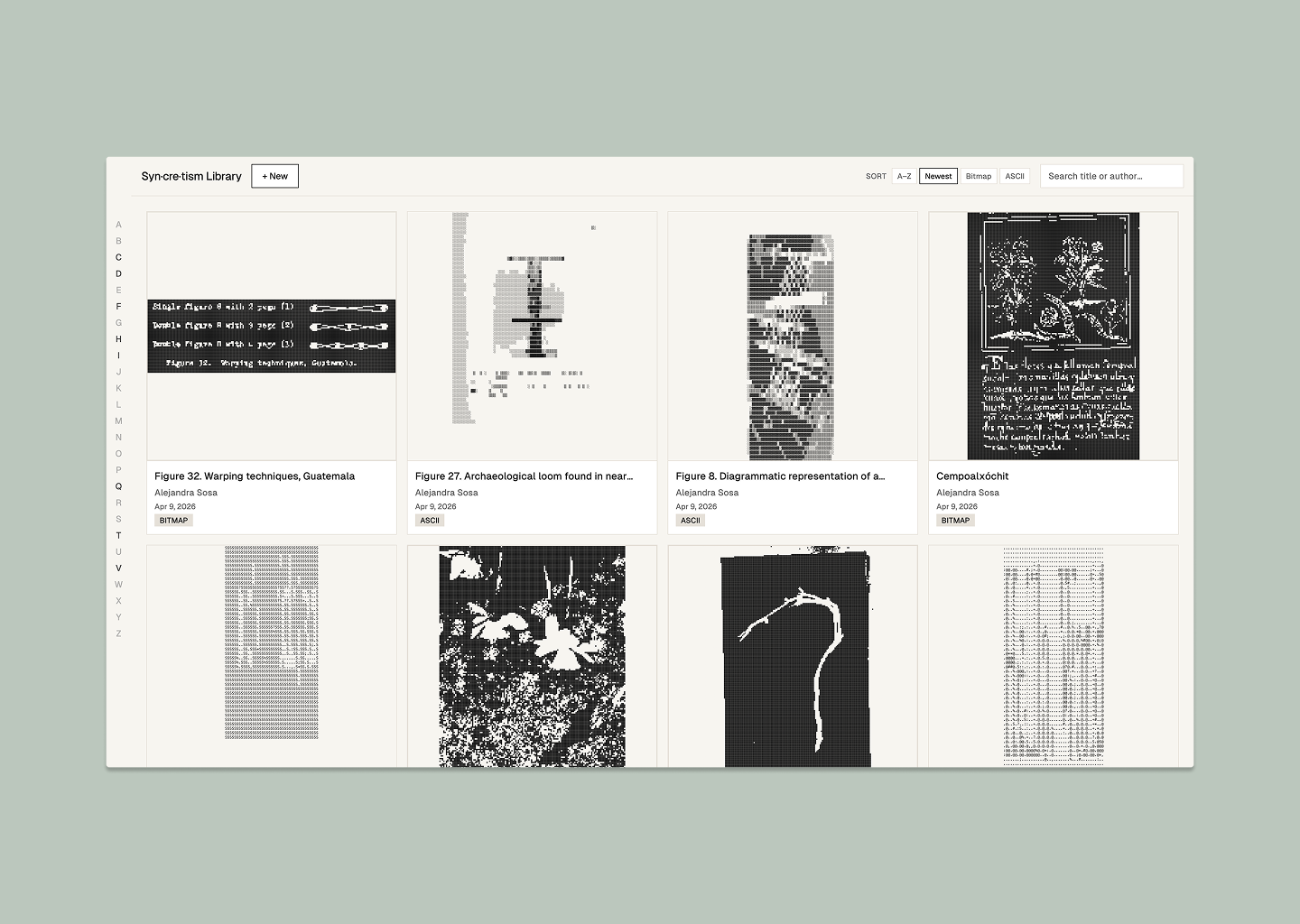
Syncretism Library — a library I built for this design research; it is the tool I use to organize and navigate materials for Spinning the Digital Thread.

Project outputs

Research — publications, demos, and sites from Spinning the Digital Thread.

RoleDesign researcher, interaction/concept design, developer (Python/Processing)
Timeline2026 - Ongoing
ToolsReact.js, Processing, Figma
MethodsLiterature review, archival research, Python/Processing scripting, weaving/knitting/crochet, visual documentation
Overview

Spinning the Digital Thread explores how textile systems and language translation shape the way we understand code today. I combine Python/Processing scripting with weaving, knitting, and crochet to translate linguistic concepts into both digital and physical patterns. The project matters to my design practice because it helps me build interfaces and systems with stronger cultural awareness, material thinking, and accountability.

Research Proposal

This project investigates the intersection of textile craft and computational thinking through the lens of colonial language transitions. By examining how Indigenous languages like Nahuatl and Maya encoded complex worldviews, and how those were transformed through Spanish colonization and eventually into contemporary programming languages, we explore the politics of translation and encoding.

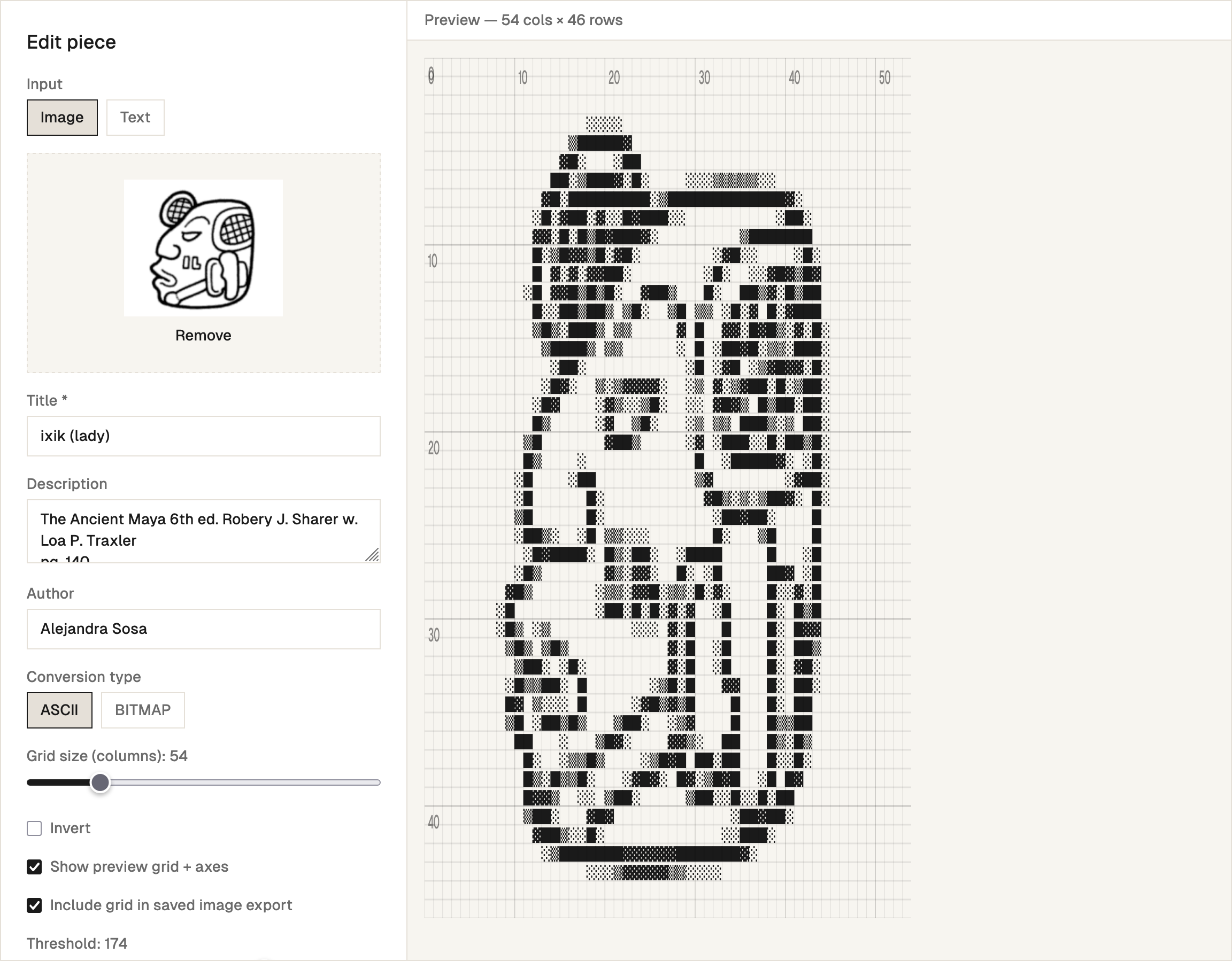
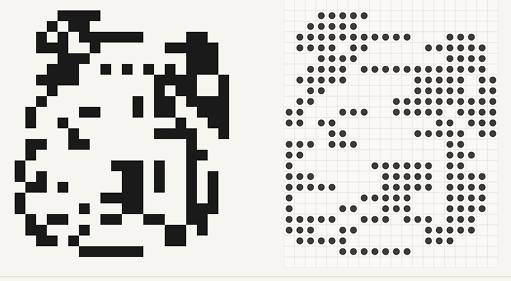
The work synthesizes theory-based research into linguistic micropoetics and material culture with hands-on practice—translating semantic concepts into digital patterns (bitmaps, ASCII) via Python/Processing, then manually reinterpreting these patterns through traditional textile techniques: weaving, knitting, and crochet.

This methodology forces a tactile inquiry into the relationship between signs and material surface, honoring Indigenous epistemologies that understand writing not as abstract symbol but as material practice—whether carved in stone, painted on bark, or woven into cloth.

Central Research Question

How do pre-Hispanic weaving techniques and colonial linguistic transitions inform contemporary understanding of code as a material and cultural practice?

This question examines the parallels between textile patterns as encoded information and programming languages as colonial inheritances, investigating how Indigenous material practices offer alternative epistemologies for understanding computational thinking.

Design Research Question

Can the manual reinterpretation of digitally-translated linguistic concepts through traditional textile methods reveal new insights about translation, materiality, and technological determinism?

By moving from text → code → bitmap → textile, this practice-based approach creates a feedback loop that questions the assumed transparency of digital translation and foregrounds the embodied knowledge required to materialize abstract patterns.

Historical Context

Analytical Engine

This section traces an early computational model to show how textile logic shaped foundational ideas of programmable systems.

Charles Babbage's analytical engine

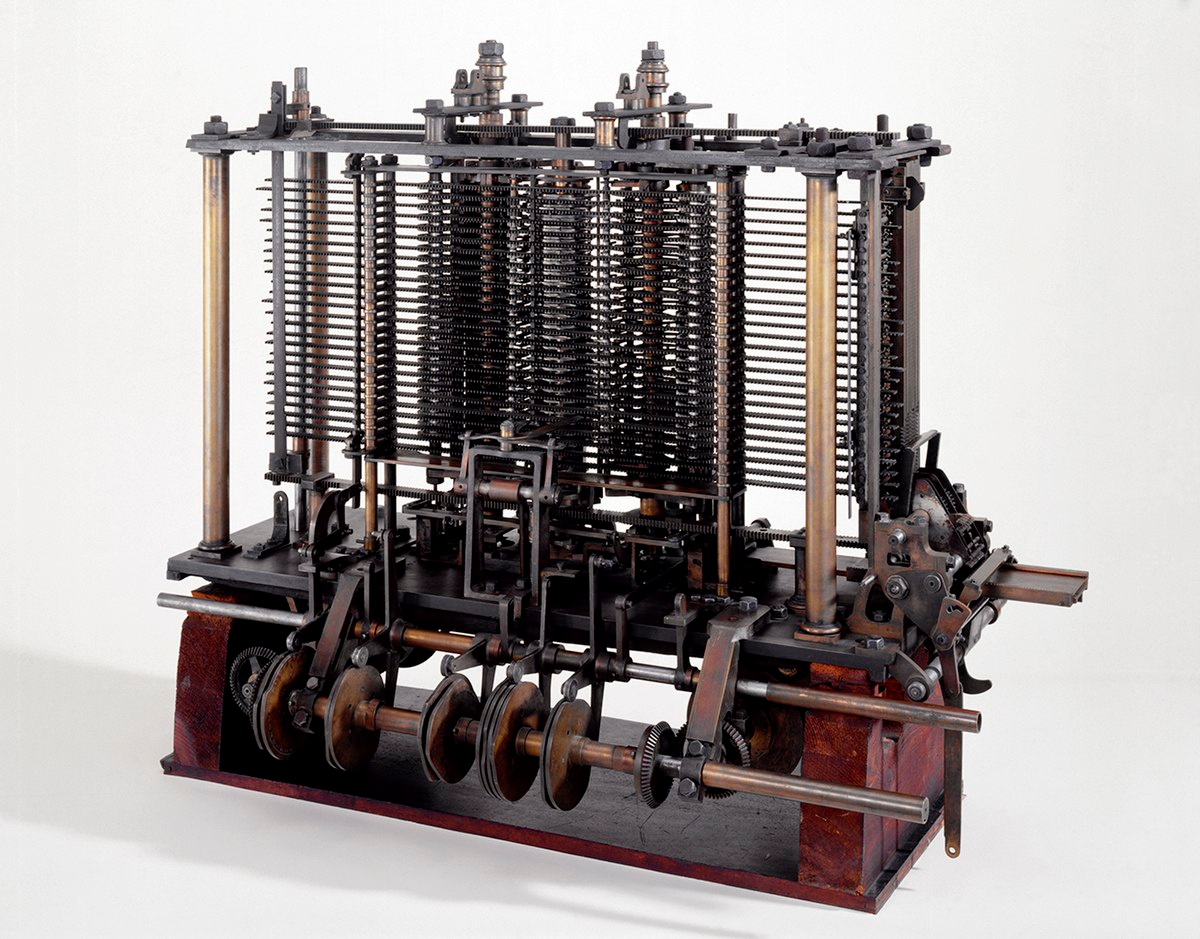
1Babbage's Analytical Engine (trial model), 1834-1871

Historical analytical engine components

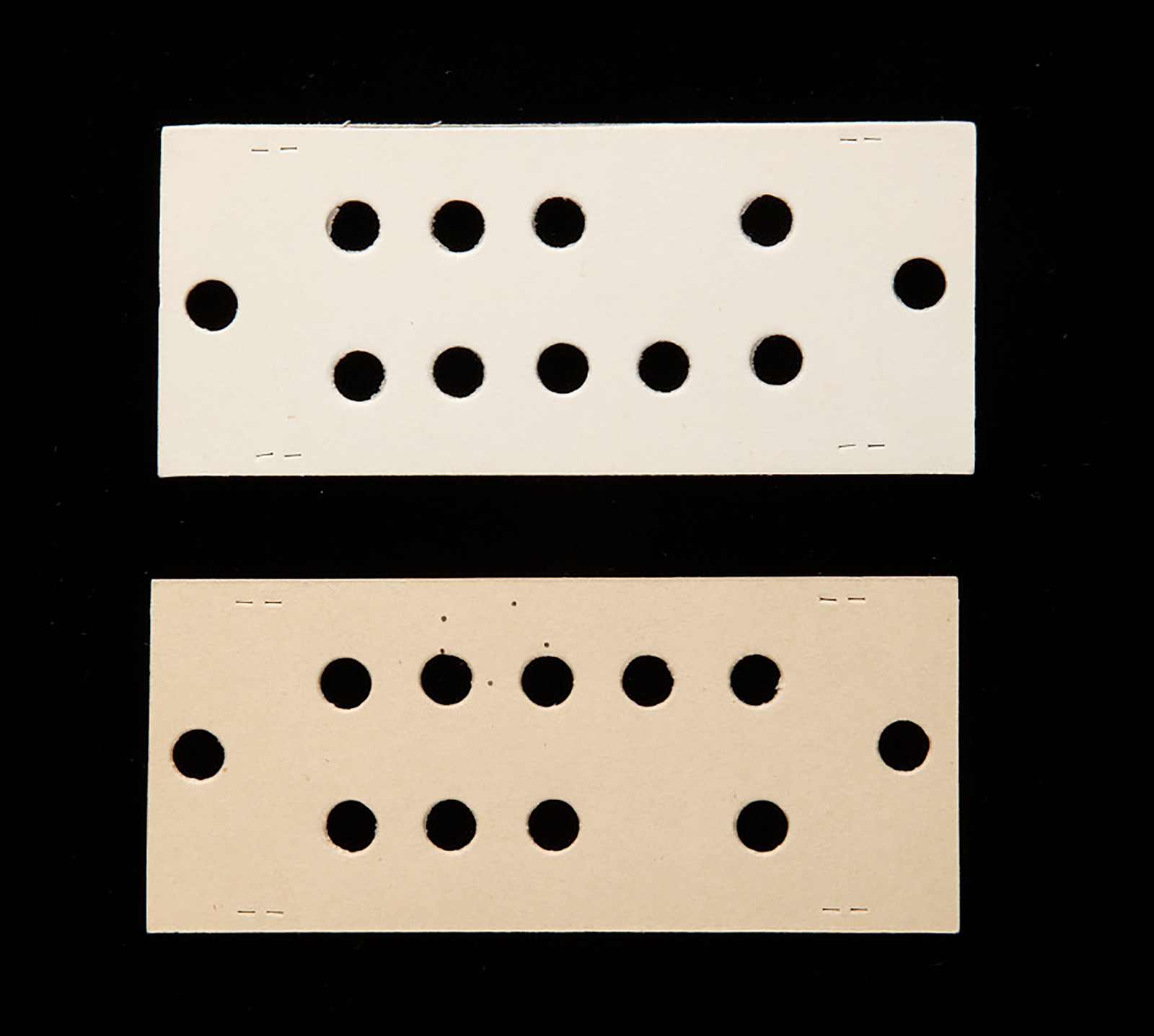
2Punch Cards in the Style of Charles Babbage

Charles Babbage's Analytical Engine (1837) represents one of the first mechanical computers1, conceptualized to perform any calculation through punched cards2—a technology borrowed from textile manufacturing. Ada Lovelace recognized its potential beyond mere calculation, envisioning it as a medium for composing music and creating art.

The connection between weaving and computing is not metaphorical but historical: the logic of programmable patterns originates in the loom. This project reclaims that lineage, examining how gendered labor (textile work) and colonial language hierarchies have shaped our contemporary relationship with technology.

1837

Analytical Engine conceived

Pattern

Punched cards from Jacquard loom

Vision

Ada Lovelace's algorithmic poetry

Historical Context

Jacquard Loom

This section shows how pattern-making in cloth established key principles later formalized in digital computation.

Jacquard loom punched cards

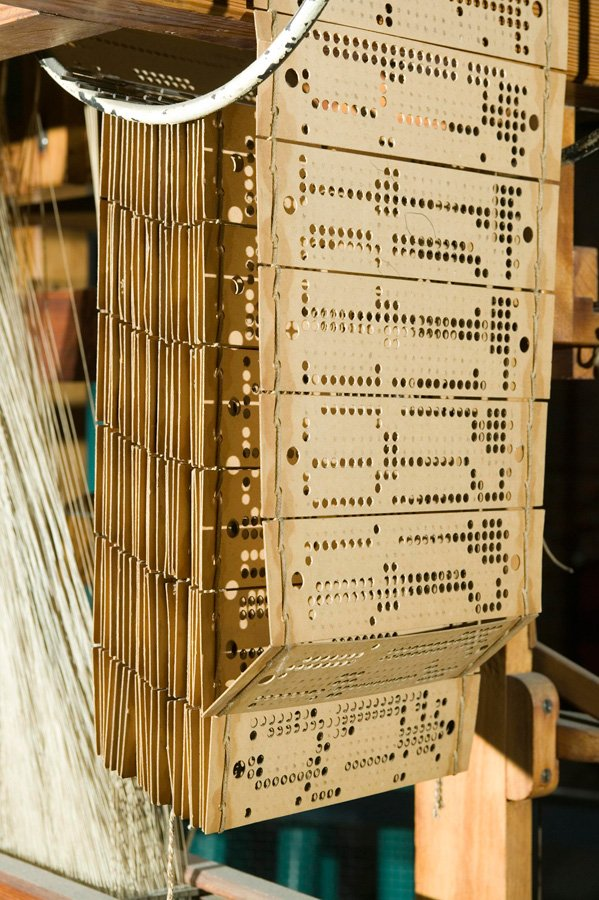
1Jacquard loom punched cards

Jacquard loom mechanism

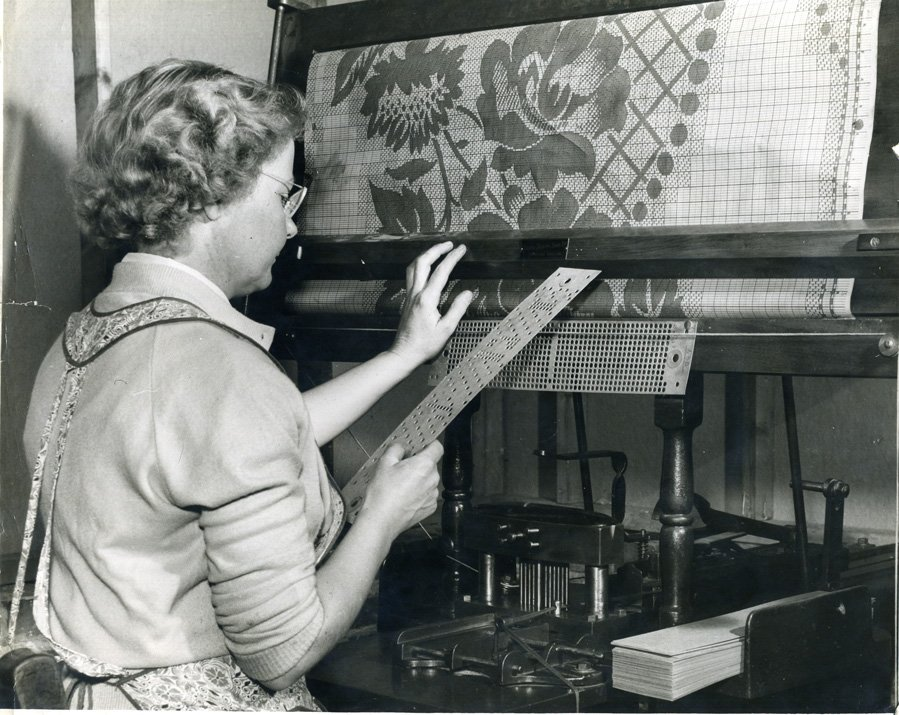
2Jacquard loom mechanism

Joseph Marie Jacquard's programmable loom (1804) revolutionized textile production by using punched cards1 to control complex weaving patterns. Each card represented a single row of the design, with holes determining which warp threads would be raised—effectively creating a binary system encoded in physical material.

This technology emerged from centuries of textile knowledge, predominantly held by women and colonized peoples. The Jacquard loom2 represents a pivot point where embodied craft knowledge was abstracted into mechanical process—a pattern that would repeat in the digital age, often erasing the labor and epistemologies that made such abstractions possible.

Invention

Programmable loom, 1804

Shift

Craft knowledge to mechanical process

Legacy

Stored-program logic prefigures modern computing

Pattern as Program

The Jacquard loom established the fundamental logic of modern computing: stored programs, sequential execution, and binary encoding. Understanding code as textile pattern rather than mathematical abstraction offers a more embodied, materially-grounded epistemology.

Cultural Context

Linguistic Resilience

This section situates translation as a cultural process, highlighting how language carries both power and resistance.

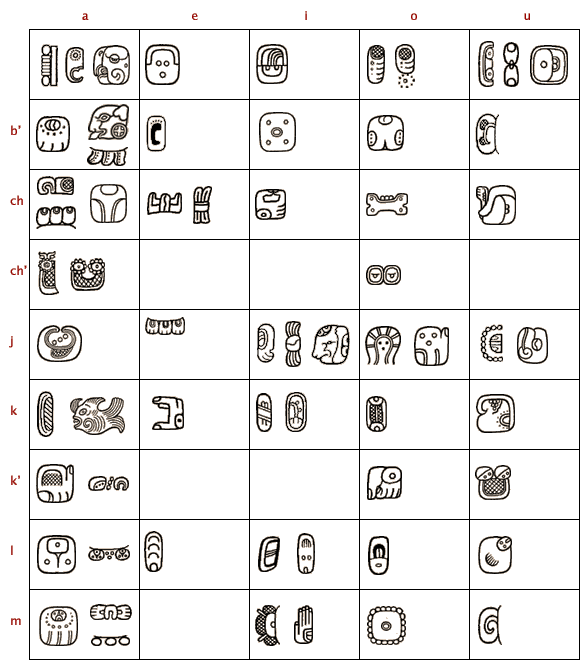
Mayan phonograms and glyphs

1Mayan phonograms and glyphs

Mayan Phonograms

Maya writing distinguished between media: tz'ihb (painting) versus carving, recognizing that material substrate shapes meaning—a principle erased in digital abstraction.

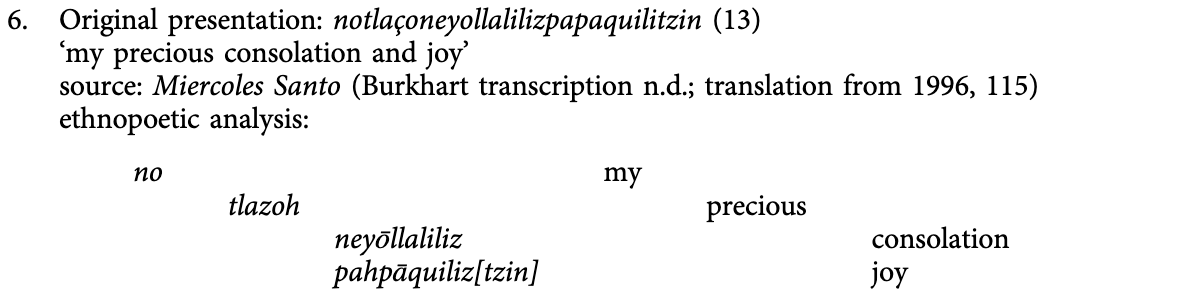
Colonial Nahuatl text manuscript

2Colonial Nahuatl text manuscript

Colonial poetry in Nahuatl script

3Colonial poetry in Nahuatl script

Colonial Nahuatl Poetry

Texts like the Tlatelolco Aesop's Fables or Huei tlamahuiçoltica show how Nahuatl adapted to Latin script while preserving semantic complexity—hybrid documents of resistance and survival.

Indigenous Mesoamerican languages like Nahuatl and Maya survived Spanish colonization through adaptation and resistance1. These languages encode worldviews fundamentally different from European linguistic structures—concepts like "hypertrophic words" in Nahuatl 2 that compress entire narratives into single morphological units, or Maya distinctions between writing systems based on material substrate (painted vs. carved).

Examining these linguistic transitions—and their preservation in colonial-era texts—reveals how translation is never neutral. Each layer of encoding (Nahuatl → Spanish → English → code) 3 carries colonial power relations, yet also preserves traces of resistant epistemologies.

Resilience

Language survival through adaptation and resistance

Micropoetics

Hypertrophic words compress complex narratives

Encoding

Nahuatl → Spanish → English → code

Hypertrophic Words

Nahuatl "micropoetics" creates compound words that function as compressed narratives. A single word can encode subject, action, object, location, and temporal relationships—a form of information density that challenges Western assumptions about language as linear sequence.

Similar to how a single line of code can invoke complex nested functions, but grounded in spoken/material practice rather than mathematical abstraction.
Methodology

Data & Methods

This section outlines how I move between research and making to test ideas across code, language, and material form.

Synthesized Approach: Practice-Based + Theory-Based

01

Data Collection (Theory)

Linguistic Data (Nahuatl/Spanish)

Review texts on micropoetics/hypertrophic words (Nahuatl) and cultural translation/syncretism in colonial Spanish texts, including Aesop's Fables (Tlatelolco), Popol Vuh (K'iche), and Huei tlamahuiçoltica (Mexico).

Material/Technical Data (Maya)

Research pre-Hispanic techniques (backstrap weaving) as analogues for code, examining how Maya terms like tz'ihb and u-xul differentiate writing by material medium (painted vs. carved).

02

Experimentation (Practice)

Digital Translation

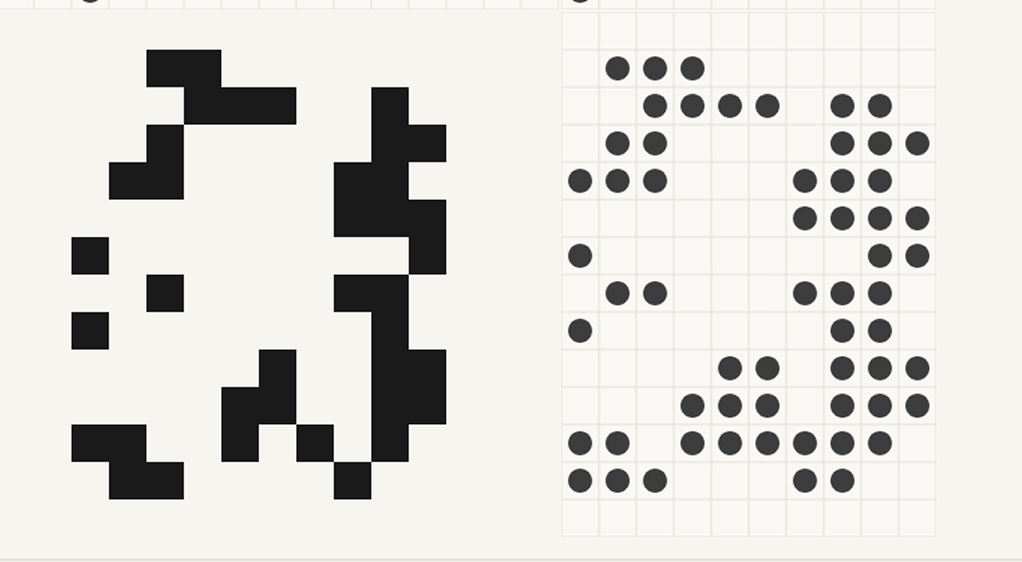
Linguistic concepts translated into sequential patterns (bitmap/ASCII) via Python/Processing, creating a dictionary of stitch patterns derived from semantic structures.

Manual Reinterpretation

Coded patterns realized via weaving and knitting, forcing tactile inquiry into the relationship between signs and material surface, informed by Maya emphasis on materiality.

Documentation

Process documented through visual archives, field notes, and synopses to ensure traceability and critical reflection.

Translation Pipeline

This section clarifies each translation step so the gains and losses in meaning remain visible.

Each stage introduces a new layer of translation — and a new site of loss.

01

Linguistic Text

Source manuscript

02

Python/Processing

Code output

03

Bitmap Pattern

Generated grid

04

Stitch Dictionary

Mapping chart

05

Physical Textile

Finished piece

Outputs

Syncretism Library

This section showcases the research tool I use to organize, connect, and navigate references throughout Spinning the Digital Thread.

Spinning the Digital Thread cover image used for Syncretism Library
Tool Showcase

Syncretism Library

Syncretism Library is the working research environment I built to collect, organize, and navigate references for Spinning the Digital Thread. It supports pattern tracing across language, code, and textile studies while keeping sources visible through each stage of the project.

Site objectives

  • Help readers understand how references connect across language, textile, and computational histories.
  • Make the research process legible by showing sources, tags, and thematic groupings in one place.
  • Support deeper reading with quick pathways from case-study sections to the underlying archive materials.
Open Syncretism Library →
Research Archive

Arena Board

This section is reserved for the Spinning the Digital Thread Arena board so references and in-progress research can be viewed in context.

Arena board embed placeholder
Add Arena board link →
Outputs

Material Outcomes

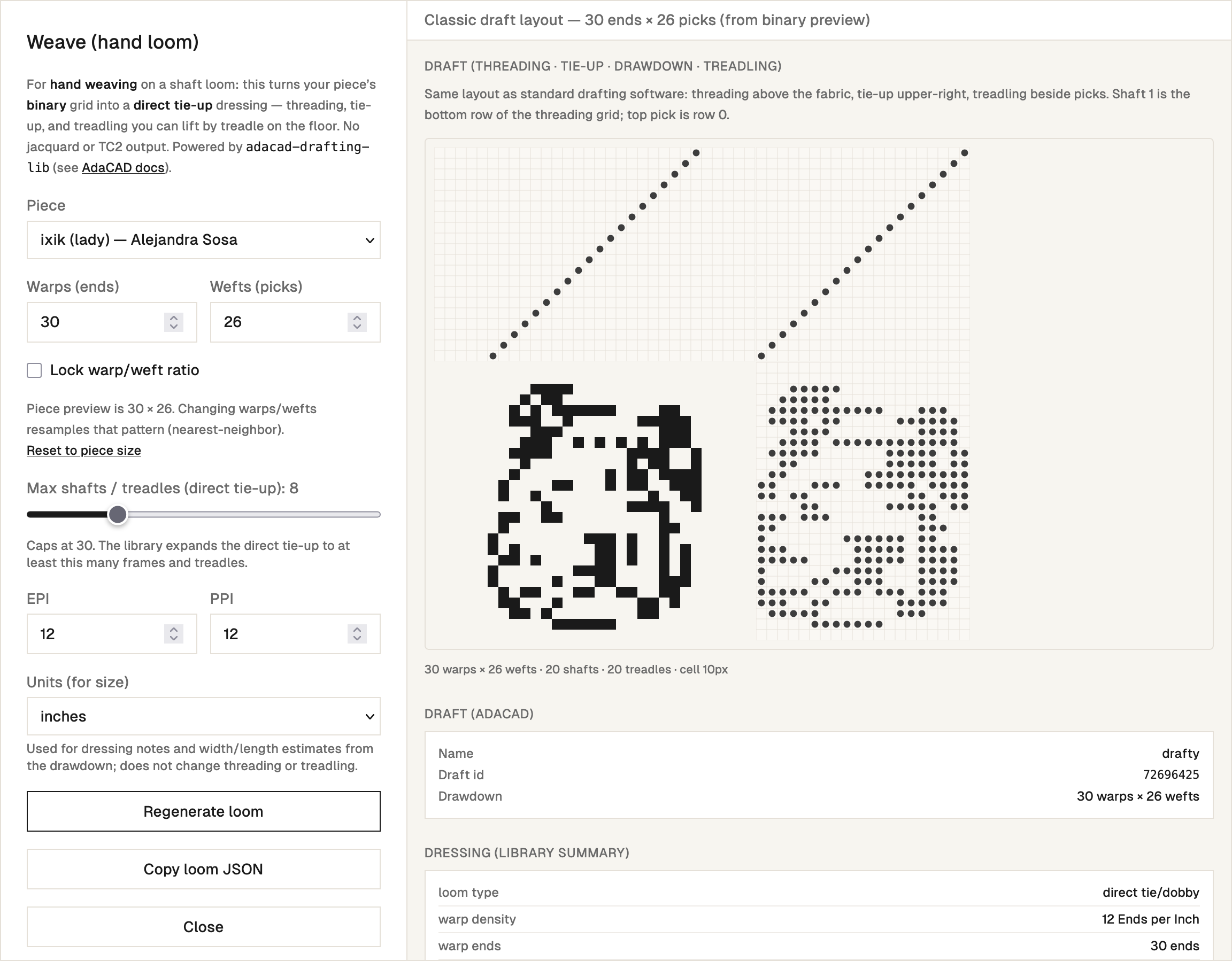
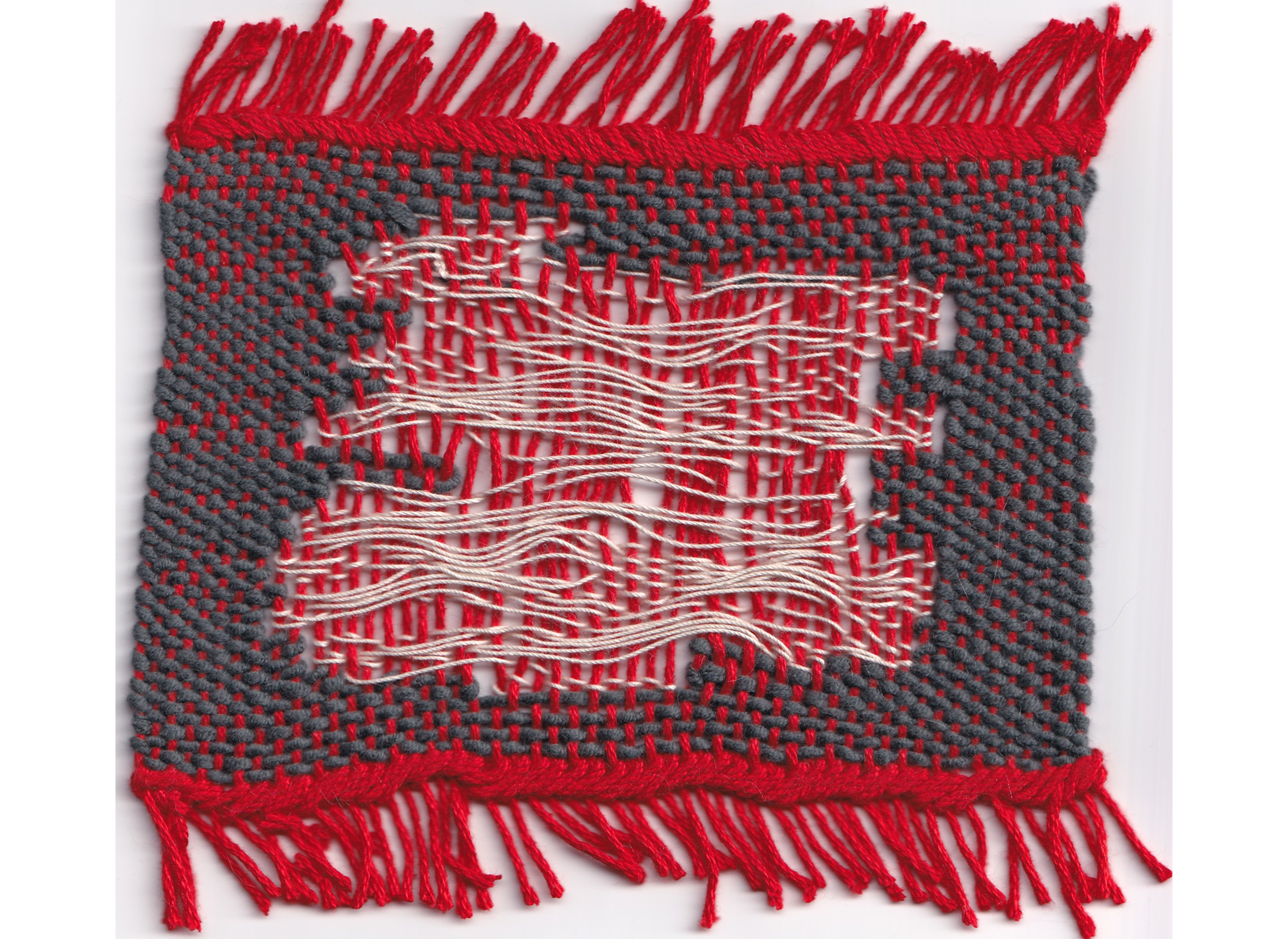
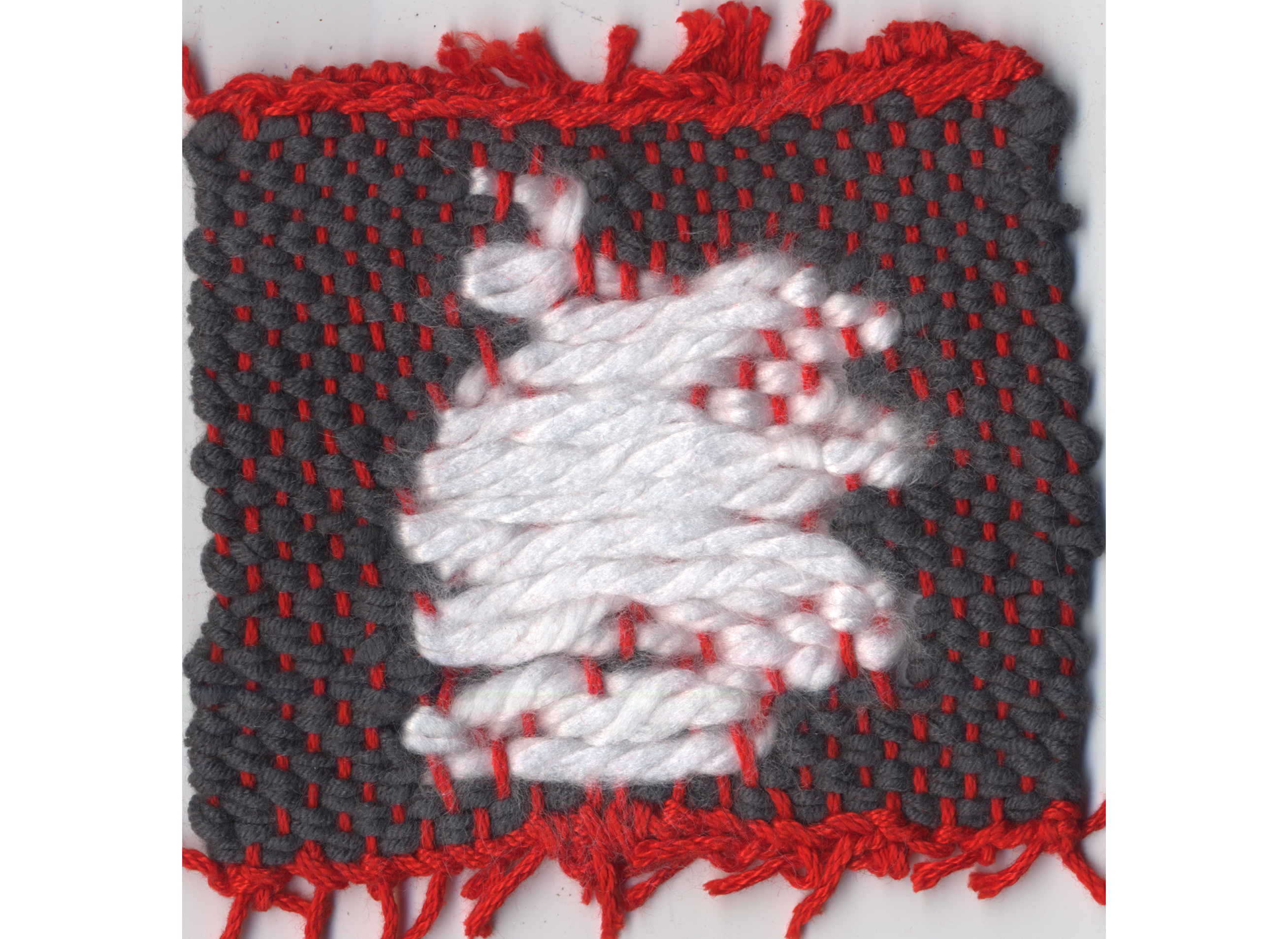
This section documents the weaving outcomes produced by translating linguistic structures through code into textile form.

Material Outcomes

Weaving Studies

The weaving studies translate coded outputs into physical textile artifacts, making it possible to evaluate meaning, loss, and transformation in material form.

  • Pattern iterations translated from linguistic structures
  • Stitch-based reinterpretations of generated code outputs
  • Process documentation connecting each textile to its source logic
Evaluation

Significance & Limitations

This section evaluates both the contributions and tradeoffs of treating code as a material and cultural practice.

Significance of the Work

Provides a critical mapping of gender, technology, and colonial power structures, revealing how textile labor and linguistic hierarchies have been systematically devalued in the history of computing.

Contributes new perspectives to media art outside hegemonic scientific paradigms, centering Indigenous epistemologies and embodied knowledge practices.

Integrates Indigenous forms of knowing into contemporary design practice, enhancing visual literacy and offering alternative models for human-computer interaction grounded in material thinking.

Limitations

Subjectivity in translating complex semantic concepts (like hypertrophic words) into simple binary inputs (code). The translation process itself embodies the colonial violence it seeks to examine—a methodological tension that cannot be fully resolved.

Scope is limited to selected linguistic terms and textile methods, requiring further expansion. The project represents a starting point rather than exhaustive documentation, with many cultural contexts and weaving traditions yet to be explored.

Critical Reflection

This project acknowledges its position within colonial knowledge systems even as it attempts to critique them. The act of translating Indigenous knowledge into academic discourse and digital media risks replicating the extractive logics it examines. The methodology prioritizes process documentation and collaborative knowledge production as partial strategies of accountability, while recognizing that no research can fully escape its complicity with institutional power.

References

Works Cited

[1]

De Berduccy, S., & Montero, V. (2021). Spinning the Conductors of an Indigenous Tradition: Textile Computing and the Algorithmic Loom. Leonardo, 54(4), 412–417.

[2]

Kolesnikova, D. A. (2025). From Loom to Code: Rethinking Interfaces Through Cyberfeminist Practices. Design Studies, 89, 101234.

[3]

Leeming, B. (2014). 'Micropoetics': The Poetry of Hypertrophic Words in Early Colonial Nahuatl. Hispanic Review, 82(3), 281–301.

[4]

Matsumoto, M. E. (2022). Qualia of Proximity and Materiality in Classic Maya Hieroglyphs. The Art Bulletin, 104(2), 6–28.

[5]

Vis, D. (2021). Research For People Who (Think They) Would Rather Create. Amsterdam: BIS Publishers.

arrow_forward